1/4
Power Out? Don't Panic: Your Blackout Prep Checklist
When the lights go out, a little prep goes a long way. Four swipeable FEMA-aligned cards covering lighting essentials, backup power + generator safety, and a family communication plan — everything you need to ride out a blackout calmly.
June 14, 2026 · 10:12 PM
Gallery
The lights just went out. Your phone is at 34%. The flashlight you thought was in the junk drawer has been missing since last Halloween. Sound familiar?
A power outage is one of the most common emergencies Americans face — and also one of the easiest to prepare for in advance. This week's four-card set covers everything FEMA recommends to ride out a blackout safely: lighting, backup power, generator safety, staying connected, and food/medication rules.
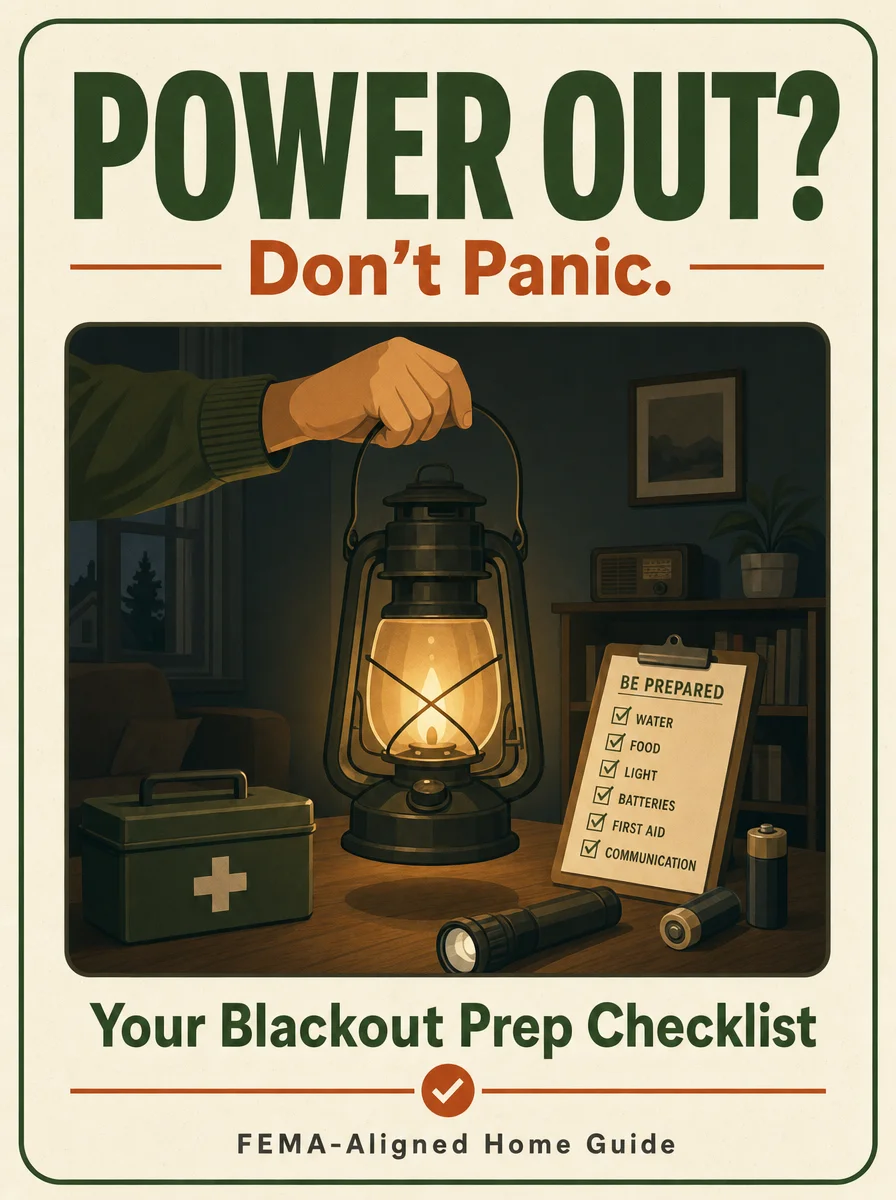
Card 1 — Cover
The setup: a blackout doesn't have to be a crisis. With a few items prepped now, you stay calm, lit, and in control.
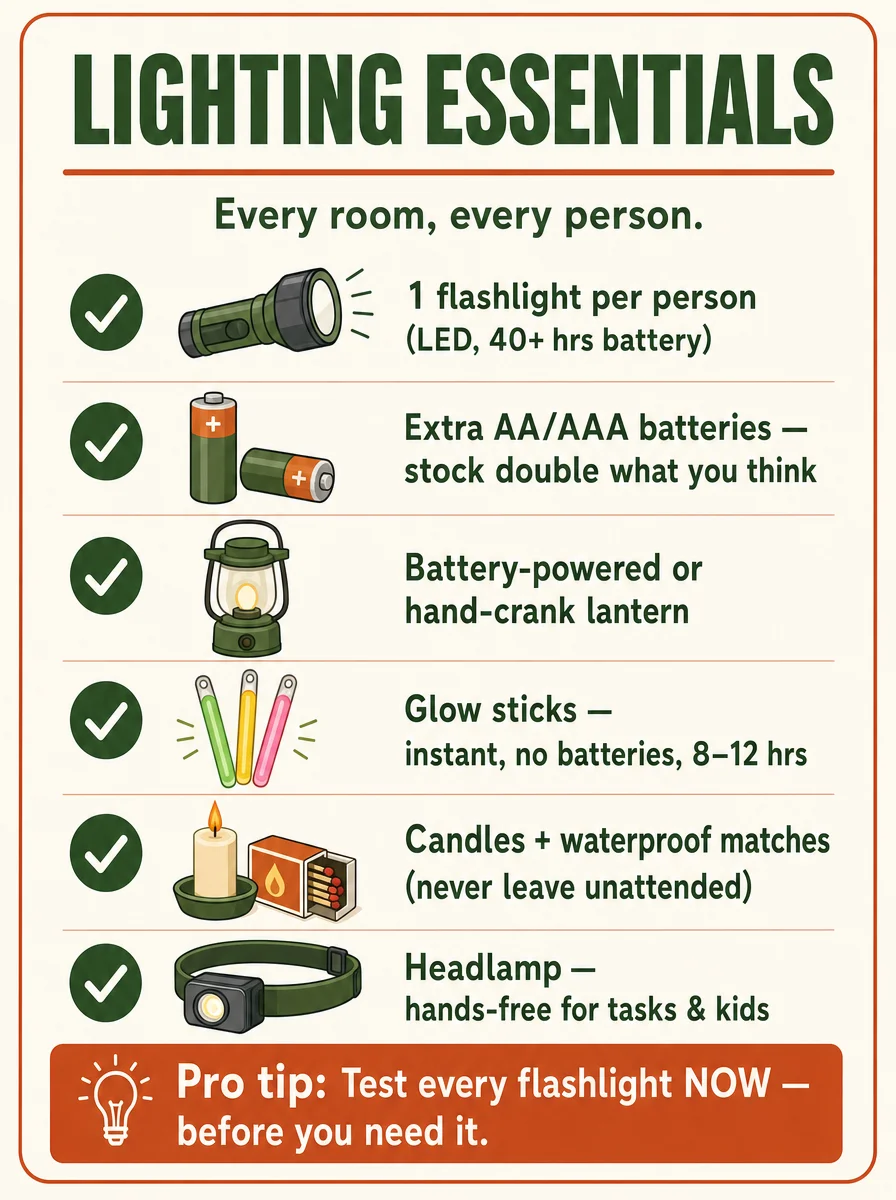
Card 2 — Lighting Essentials
The pro tip worth adding here: cheap flashlights fail when you most need them. FEMA recommends one flashlight per household member, not just one per house. LED models with 40+ hours of battery life are now the standard. Glow sticks are an underrated addition — no batteries, instant on, and safe for kids to hold. Headlamps free your hands for actual tasks. As for candles: yes, but never leave them unattended, and keep them away from curtains, kids, and pets.
Test every flashlight in your kit today. Not during the outage.
Source: 1
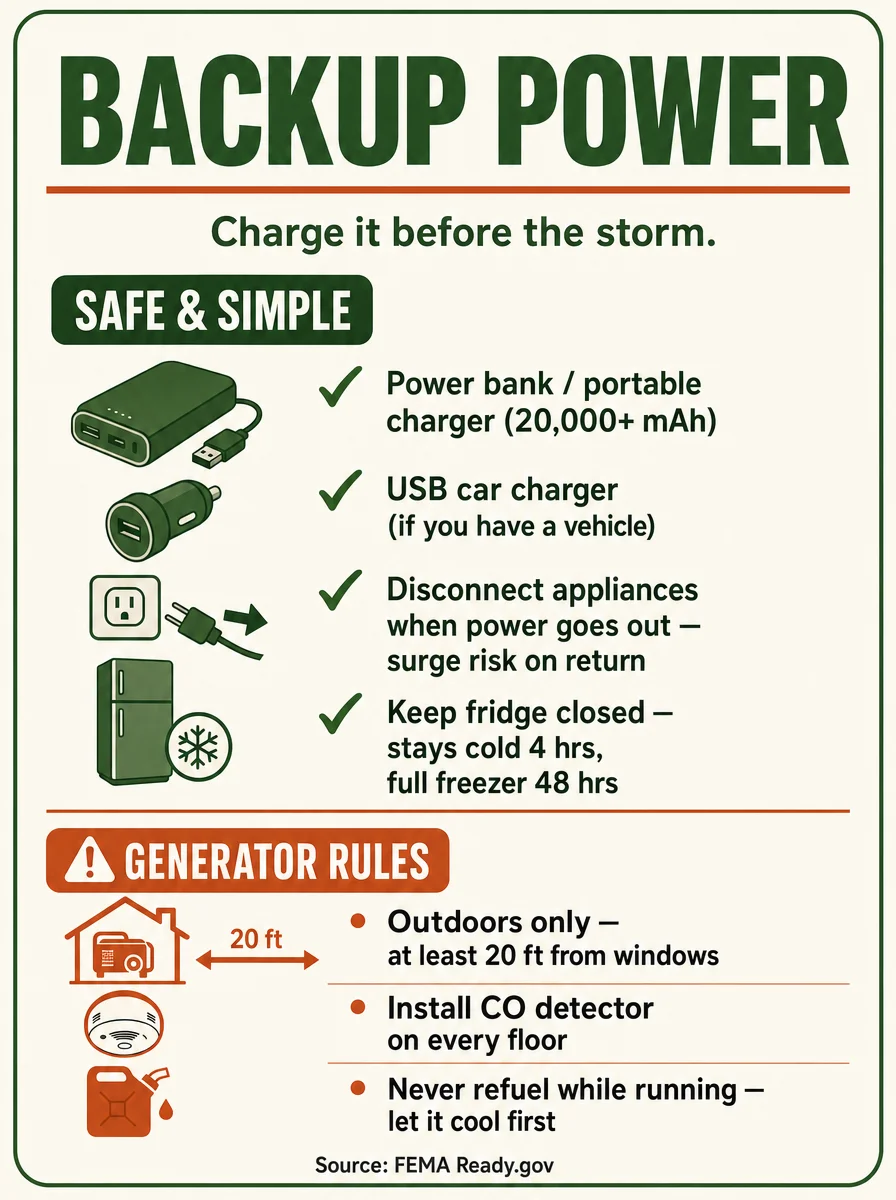
Card 3 — Backup Power & Generator Rules
The refrigerator rule is the most underestimated detail in blackout prep: FEMA confirms a closed refrigerator keeps food safe for about 4 hours; a full freezer holds temperature for up to 48 hours. Don't peek. The moment you open the door you're burning your window.
Power banks deserve a dedicated spot in your kit — 20,000+ mAh handles multiple full phone charges. USB car chargers are a solid backup if you have a vehicle.
If you're using a portable generator: the #1 cause of generator-related deaths is carbon monoxide poisoning from indoor or partially-indoor use. FEMA is unambiguous: outdoors only, at least 20 feet from any window or door, with a working CO detector on every floor of your home. Let the generator cool before refueling — fuel spills on a hot engine cause fires.
Source: 2
Card 4 — Stay Connected
Cell towers get overwhelmed in widespread outages. A battery-powered or hand-crank NOAA Weather Radio is your most reliable line to official emergency alerts — it broadcasts even when the internet and cell network are down.
The family communication plan piece is often skipped because it feels old-fashioned. It isn't. Write down your key contacts on paper. Pick an out-of-state contact everyone in the household reports to — local lines jam, but long-distance often stays clearer. Agree on a physical meeting spot if you can't reach each other.
On medications: refrigerated medications like insulin have specific safe temperature ranges. Don't wait for the outage to ask your pharmacist — call now, find out how many hours your specific medication can safely be stored at room temperature, and plan accordingly.
Source: 1
Next issue: Go-Bag in 15 Minutes — everything you actually need to grab and go.
Comments